Backyard Golf: Practical Tips and Tech Solutions

Setting Up a Cost-Effective Golf Practice Area at Home

Where you can find most of Strolan’s blood sweat and tears.

Welcome to another engaging episode of the Holy Duffer Podcast! Today, we’re diving deep into the practicalities and benefits of creating a backyard golf practice area. Hosts Mark and Strolan lay out the essentials for setting up various budget-friendly golf simulators, mats, and nets, including their personal setups, costing from $1,400 to $3,000. Their discussion also highlights useful tech solutions and the importance of tracking metrics to improve your golf game.

Why Build a Backyard Golf Practice Area?

Mark and Strolan kick things off by discussing the fundamental reasons for having a practice area at home. According to Mark, having a space where you can spend even 10-15 minutes practicing daily can significantly enhance your golf skills. He emphasizes that practicing consistently at home with the right setup can provide more value than an hour-long session at the range once a week.

Key Benefits:
Convenience: Practicing at home provides the flexibility to practice whenever you have a few spare moments.
Cost-Effectiveness: While initial setup may come with a price, ongoing savings on range fees and travel make it worth the investment.
Immediate Feedback: With the right tools, you can get immediate feedback on your swing, ball speed, and other crucial metrics.

Basic Components of a Backyard Setup

1. Mat and Net:
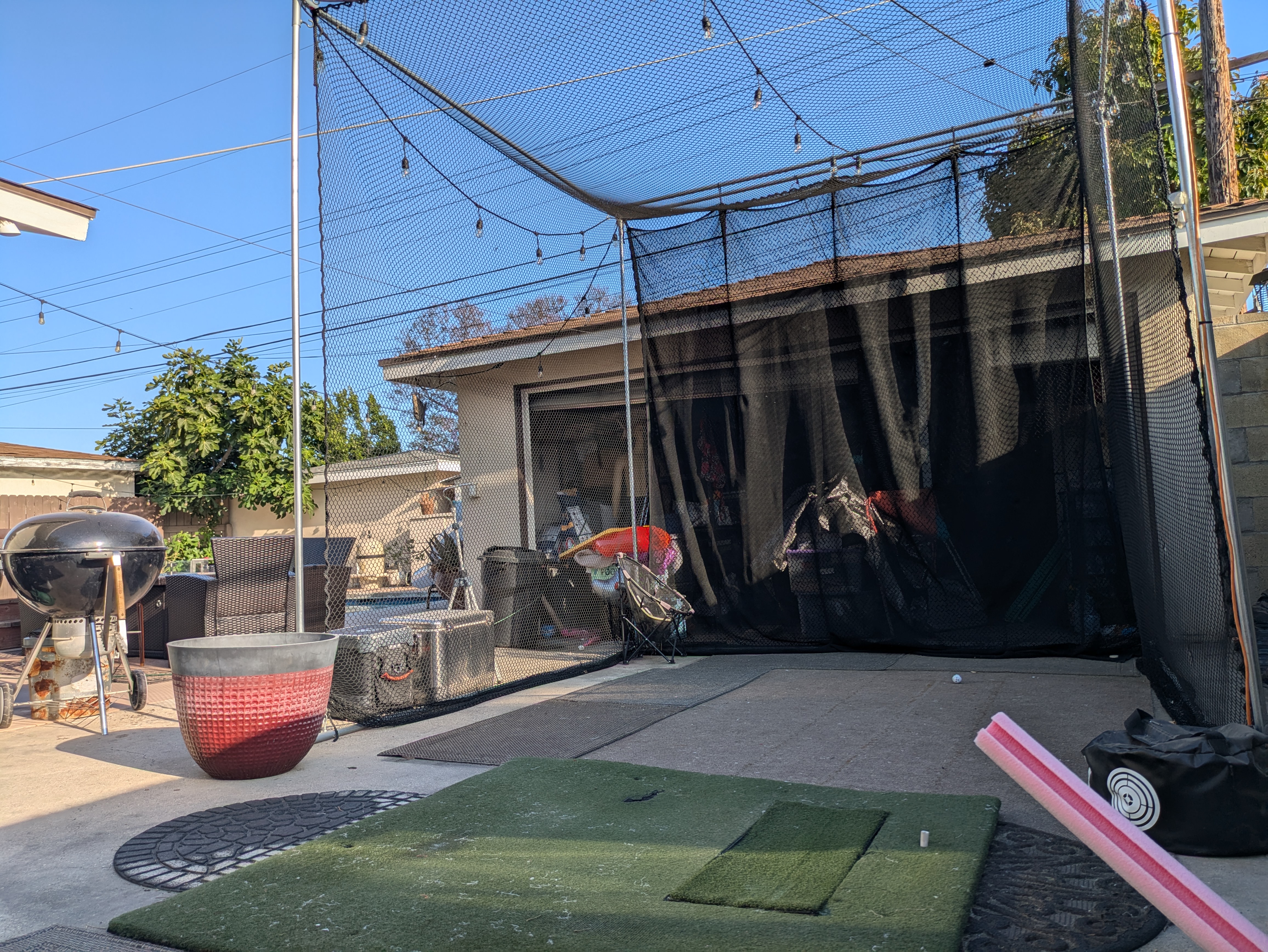
For those just starting, a basic setup includes a golf mat and a net. Strolan mentions he bought a $50 used range mat and a $165 holy grail hitting insert to mimic real turf conditions. This allows you to replicate the feel of a real course in your backyard.

2. Launch Monitor:
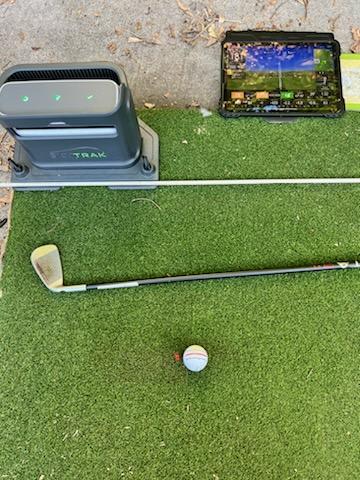
A crucial element to up your game is a launch monitor. Mark emphasizes that devices like Skytrak or the MLM 2 Pro provide valuable swing data, ball speed, and distance metrics. Even a basic radar monitor like the Swing Caddy, which tracks club speed, ball speed, and estimated carry, can give helpful insights.

Setting Up on Different Budgets

Strolan’s Setup ($1,400):
Cimarron Masters Golf Net 10 x 10 x 10: A robust net that can handle all kinds of mishits. This system allows Strolan to practice without worrying about damaging the surrounding property, or himself!
Holy Grail Hitting Strip: Adds realism to practice sessions.
Rapsodo MLM2 Pro: Provides essential data like swing speed and carry distance, helping track improvement over time.

Can someone clean that man’s club!

**Mark’s Setup ($3,000)**:
– **Customized Structure**: Utilizing aluminum tubing covered with a tarp, Mark’s structure is designed to maximize functionality within limited space.
– **Skytrack+ Launch Monitor**: An accurate and space-efficient solution that doesn’t require marked balls, making it convenient and user-friendly.
– **Additional Netting**: To prevent incidents and ensure safety.

The Importance of Technology in Improvement

Both hosts place strong emphasis on the role of technology in improving your golf skills. Launch monitors like Skytrak and MLM 2 Pro offer extensive data, helping you understand and analyze every aspect of your game. These tools allow for:
Real-Time Feedback: Immediate analysis of each shot helps in making quick adjustments.
Simulation of Real Courses: Play on simulated versions of famous courses for a varied practice routine.
Metrics Tracking: Keep track of your club speed, ball speed, carry distance, and other vital statistics.

Mark shares his experience of leveraging a Skytrak monitor to enhance his game by focusing on out-of-position shots and shaping shots effectively. He underlines the benefit of these tech solutions, which give detailed insights that traditional range training often misses.

Avoiding Indoor Swing Syndrome

Practicing indoors or in a confined space can sometimes lead to “indoor swing syndrome,” where golfers alter their swings due to constrained space. Strolan and Mark underline this issue while discussing the need for proper setup to allow free swings without fear. Both hosts emphasize the necessity of a well-constructed enclosure to practice without any mental hindrance effectively.

Conclusion

Establishing a backyard golf setup can be one of the best investments for any golf enthusiast. Regardless of your budget, the initial outlay can lead to long-term improvements and enjoyment. From basic mats and nets to sophisticated launch monitors, technology has made it easier than ever to bring the golf course home. So, grab your gear, set up your backyard practice area, and watch your game improve!

Until next time, Mark, Strolan, and the Holy Duffer Podcast team will see you on the green!

Playing through it to get to it – Lesson’s from Sandpiper

Strolan and Lucas before the 36 hole of the tournament.

Reflections on Breakfast Balls #4 – The Western Invintational @ Sandpiper GC

What a rollercoaster of emotions this tournament at Sandpiper was. This last weekend was something that provided more than just a test of skill—it was a profound journey of personal growth and perspective.

The signature Par 3 11th @ Sandpiper GC

For starters, this tournament taught me a lot about humility. I started off at the 10th hole with a decent drive, securing a bogey. All things considered, I felt pretty good. Then on the 11th hole, I managed a birdie and thought, “Wow, this is going to be a great tournament.” Little did I know, the course had different plans for me. As I reached the 16th hole and scored a brutal 13, my confidence began to wane.

Yet, it wasn’t all about the score. One of the most significant takeaways was how to manage both the highs and lows on the course. Mark and I always stress how crucial it is to embrace both the good and the bad experiences in golf, and this tournament was a shining example of that. I realized that negative thoughts can heavily impact performance. When I let the frustration consume me, I lost focus and ultimately control over my game. It was a harsh but necessary lesson in mental fortitude.

But perhaps the most meaningful aspect of this experience was sharing the journey with my son, Lucas. There’s something profoundly special about having your son by your side, guiding you, and offering support, even when things aren’t going well. Lucas, who was my caddy, provided not just technical advice but emotional support. He was there during my highs and, most importantly, my lowest moments.

I remember on that menacing par-5 13th hole. I was initially reluctant to take the shot Lucas suggested, a 165 yard 6 iron over a forced carry and a bunker protecting the elevated green. From where I stood the green looked as if it was floating out over the Pacific. He encouraged me and, with his guidance, I managed to pull off the shot. Leaving it 12 feet from the pin. We celebrated together, and it felt like a shared victory.

However, the next day, I struggled on the same hole, leading to another big number. My subsequent missteps at the 14th hole further dampened my spirits. If not for Lucas’s unwavering support, there were times I considered walking off the course out of pure embarrassment.

One of the biggest lessons from this round was learning to accept support, especially from family. Lucas’s encouragement and guidance were vital. His presence reminded me of the importance of staying grounded and maintaining perspective, even in challenging circumstances.

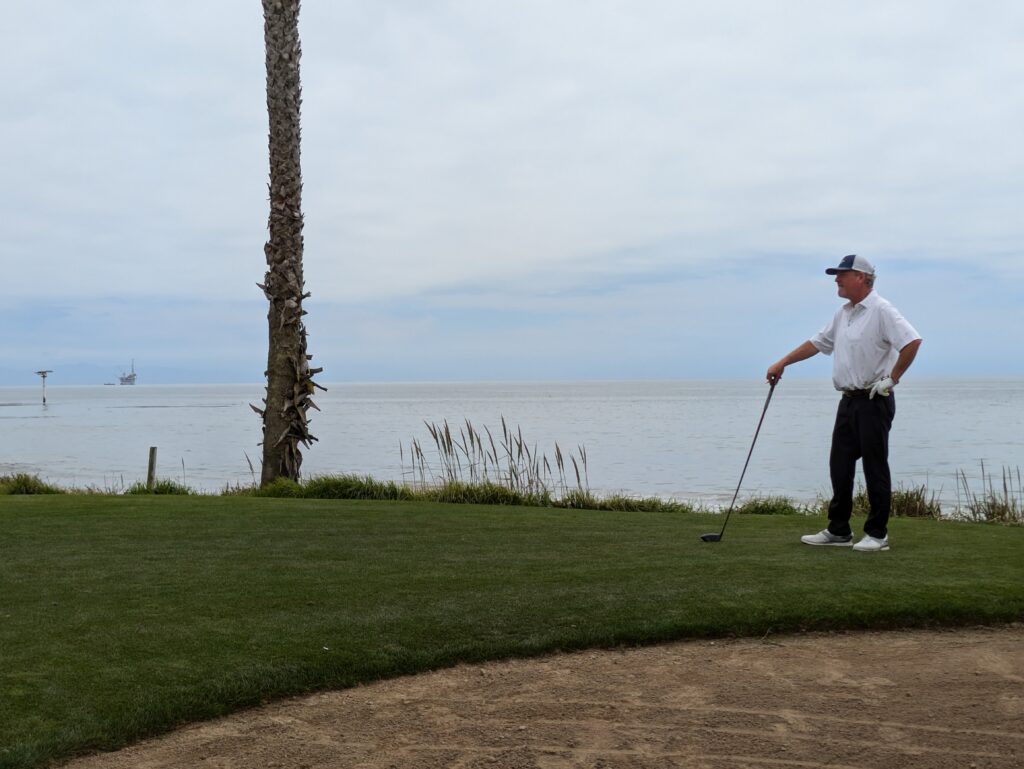
Taking in the view @ Sandpiper #12

Another valuable lesson was resilience. I faced the shanks, yips, and tops—all within the last nine holes. Mentally, I felt drained and defeated. But golf, much like life, demands resilience. It pushes you to pick yourself up after every setback, to reflect on your mistakes, and most importantly, to keep moving forward.

After the tournament, despite my initial disappointment, reflecting on the entire experience offered a new perspective. The scores might not have been in my favor, but the memories and lessons gained were invaluable. Sharing meaningful moments with Lucas, feeling uplifted by his presence, and acknowledging my own emotional and physical limits enhanced my appreciation for the game.

Ultimately, whether it’s golf or life, it’s about the journey, the learning, and the shared experiences. The laughs, the frustrations, the wins, and the losses—all form an intricate tapestry that makes it all worthwhile. I’m eager to embrace my next tournament with renewed wisdom and, of course, the support of my incredible son by my side.

Instagram: @holyduffer


Teeing Up for the Western Invitational: A Journey Through Golf, Family, and the Competitive Spirit

Photo Courtesy of Lucas Nolan

Sandpiper C.C. Santa Barabra, CA. Photo: Courtesy of Lucas Nolan

Join Strolan and Mark on the Holy Duffer Podcast as they dive into the excitement of tournament prep, father-son bonding, and the essence of competitive golf.

Introduction

In the latest episode of the Holy Duffer Podcast, hosts Strolan and Mark take listeners on an engaging journey through the world of competitive golf. The episode, titled “Breakfast Balls Ep. 3 – Western Invitational at Sandpiper Golf Club,” is rich with insights, personal anecdotes, and invaluable tips for both seasoned golfers and newcomers alike.

The Significance of Sandpiper Golf Club

Sandpiper Golf Club holds a special place in Strolan’s heart. Located near his alma mater and where he met his wife, the club is more than just a golfing venue—it’s a canvas painted with memories. As Strolan gears up for the Western Invitational, the anticipation is not just about the game, but also about reconnecting with a significant piece of his past.

Tournament Conditions and Preparations

The Western Invitational is a prestigious two-day event offering double points and the chance to qualify for nationals. Strolan and his son, Lucas, are meticulously preparing for the tournament. From playing Sandpiper’s layout on the simulator to practicing at local courses, their preparation is comprehensive.

Father-Son Bonding

Strolan’s excitement isn’t just limited to the competition. The road trip with his son, Lucas, offers a golden opportunity for father-son bonding. The shared experience of traveling, prepping, and competing brings an irreplaceable dimension to their relationship. Strolan believes that having Lucas as his caddy not only simplifies the game but also deepens their bond, reducing on-course distractions and making pivotal decisions more collaborative.

The Competitive Edge: Learning Through Experience

Strolan’s journey from casual golfer to competitive player on the US Am Tour underscores the transformative power of competitive golf. These pay-to-play, flighted tournaments without handicaps offer a professional tournament experience. With prizes, trophies, and nationwide competitions at stake, the pressure is palpable, but so are the opportunities for growth.

Strolan shares how these tournaments honed his skills, allowing him to play at prestigious country clubs and improve his overall game. He emphasizes the significance of learning through experience, managing nerves, and handling the competitive nature of these tournaments. Mark adds that minimizing distractions and focusing on what truly matters can significantly impact a golfer’s performance.

Managing Expectations and Embracing New Challenges

The hosts don’t shy away from discussing the challenges that come with competitive golf. Mark shares a humorous challenge, promising Strolan $20 if he manages to break 90 in competitive golf—a task easier said than done, especially on unfamiliar courses.

They also touch on the importance of managing expectations and how setting realistic goals can make the sport more enjoyable. This upcoming episode promises to delve deeper into strategies for maintaining composure and staying focused under pressure, a topic that resonates with many competitive golfers.

Reflections on Nervousness and Skill Development

Every golfer has faced the jitters on the first tee. Strolan recounts his initial nervousness during his first tournament, explaining how each experience has gradually helped him manage his nerves better. Mark shares his own story from a charity tournament, emphasizing the universal nature of these feelings.

The hosts conclude by reflecting on the invaluable lessons that competitive golf teaches. Whether it’s managing nerves, learning new skills, or simply enjoying the game with loved ones, the essence of golf lies in the continuous journey of improvement and the joy of the sport.

Conclusion

As Strolan and Lucas prepare for the Western Invitational at Sandpiper Golf Club, the Holy Duffer Podcast captures the essence of competitive golf, father-son bonding, and the relentless pursuit of excellence. For golf enthusiasts and casual listeners alike, this episode offers a treasure trove of insights, inspiring stories, and practical advice. Tune in, and get ready to tee up for a thrilling ride through the world of golf.

And as always – See you on the Green!

Holy Duffer Podcast: Our Grand Re-Opening

Exploring the Intersection of Golf and Gaming, Technological Advancements, and Our Exciting New Journey


Introduction

Golf and gaming may seem like an unlikely pairing, but we at Holy Duffer Podcast are here to prove otherwise. As we relaunch our podcast on a broader scale, we’re excited to invite you on a journey filled with insightful discussions, practical tips, and a lot of fun. Whether you’re a seasoned golfer or a gaming enthusiast, our podcast is tailored to enrich your experience and knowledge. Here’s a sneak peek into what our latest episode covers and what you can expect moving forward.

Reaching a Wider Audience

Mark and Strolan, the dynamic duo behind the Holy Duffer Podcast, are thrilled to announce the grand reopening of the podcast on a much wider scale. No longer limited to CastBox, our episodes will now be available on Spotify and iTunes, reaching a broader audience and helping more enthusiasts improve their game. The soft launch phase allowed us to perfect our craft, and we’re now ready to share our insights with the world.

The Mission of Holy Duffer Podcast

Bringing Technology to the Forefront


The core mission of the Holy Duffer Podcast is to leverage technological advancements to help golfers improve their skills. As Mark mentioned, the inspiration for the podcast stemmed from the realization that while technology was revolutionizing the game, many players seemed unaware of the tools and techniques available. From swing analyzers to golf simulators, the technology at our disposal today can drastically change how we learn and play the game.

Challenging the USGA

Discussing the Ball Rollback


One of the hot topics we delve into is the controversial ball rollback proposed by the USGA. Both Mark and Strolan express their perspectives on how this could impact the game, particularly for amateur golfers. We aim to provide our listeners with a nuanced understanding of these regulatory changes and their implications. Golf should remain enjoyable and accessible, and we’re here to ensure that through our discussions, everyone stays informed.

Bridging the Generational Gap

Insights and Etiquette


In this episode, Strolan shares an amusing anecdote about playing with younger golfers who adhere to outdated etiquette rules. This serves as a springboard for broader discussions on how the sport’s traditions blend with modern practices. Whether you’re an older golfer baffled by new norms or a young player navigating the traditional landscape, our podcast bridges the generational gap, offering relatable insights for all.

The Importance of Reliable Resources

Directing You to the Right Guides


While Mark and Strolan provide valuable tips and discussions, they also emphasize the importance of consulting various resources. They introduce listeners to other reputable podcasts, websites, and professionals who offer practical advice and tips. This holistic approach ensures you have access to a wealth of knowledge, enabling you to refine your skills and understanding of golf.

Golf Isn’t Just for the Young

Inspiration from Senior Players


Age is just a number when it comes to golf. Take Richard Bland, who won the Senior PGA Championship at 52. His story is an inspiring testament to how one can improve and play their best game even later in life. Mark and Strolan aim to motivate golfers of all ages, reinforcing that with the right mindset and tools, you can always get better.

Looking Ahead

Weekly Episodes and Evergreen Content


Our podcast strives to offer evergreen content—topics that remain relevant regardless of when you listen. While we discuss current issues like the ball rollback, many of our episodes delve into timeless aspects of golf and gaming. With a mix of our greatest hits from past episodes and exciting new content, we promise to keep you entertained and informed every week.

Conclusion

The Holy Duffer Podcast is more than just a show; it’s a community dedicated to the love of golf and gaming. We’re excited to share this journey with you, filled with laughter, learning, and a lot of golfing anecdotes. Visit our website at holyduffer.com, and don’t forget to follow us on Instagram at the Holy Duffer Podcast. Reach out to us with your thoughts, questions, and feedback. Here’s to making golf less frustrating, more enjoyable, and most importantly, fun.

Stay tuned, and happy golfing!

– The Holy Duffer Team

Unveiling the Secrets of Golf Coaching: Navigating the Path to Improvement

Introduction:
In the latest installment of “The Holy Duffer Podcast,” hosts Strolan and Mark delve deep into the realm of golf coaching, unearthing the nuances that can lead players from all levels towards improvement. From the importance of finding the right coach to the impact of modern technology on instruction, the conversation sheds light on the intricate process of honing one’s golfing skills.

The Significance of Quality Coaching:
Embarking on a golfing journey without proper guidance is akin to setting sail without a compass. Strolan and Mark emphasize the pivotal role a coach plays in shaping a player’s progress. With the plethora of coaches available, finding one who resonates with your learning style and goals becomes paramount. The hosts highlight the transformative power of personalized coaching, cautioning against falling prey to quick-fix solutions that often exacerbate existing issues.

The Evolution of Coaching Methods:
As the golfing landscape evolves, so does the approach to coaching. Strolan and Mark draw a parallel between traditional methods and modern advancements, showcasing how technology has revolutionized instruction. From launch monitors to data measurement devices, coaches now have access to insightful tools that aid in diagnosing and rectifying swing intricacies. The hosts stress the importance of finding a coach well-versed in biomechanics and capable of effectively communicating complex information.

The Role of Technology in Coaching:
A game-changer in the coaching arena, technology has opened new avenues for improvement in golf. Strolan and Mark shed light on the impact of advanced tools like force plates and 3D capture systems, emphasizing their benefits in refining player performance. While the accessibility of such high-tech equipment may be limited, coaches with expertise in utilizing data-driven insights can propel players towards tangible progress.

Building a Meaningful Coach-Player Relationship:

Central to the coaching journey is the rapport between coach and player. Strolan and Mark stress the significance of effective communication and mutual understanding in fostering a productive coaching dynamic. While opting for a local pro may serve as a starting point, compatibility and shared goals are essential for long-term growth. The hosts encourage players, especially beginners, to seek coaching early on, as it provides a structured foundation for skill development.

Enhancing Technique through Analysis:
In the pursuit of refining one’s golfing technique, the hosts delve into the intricacies of swing analysis. Highlighting the disparity between visual cues and club data, Strolan and Mark debunk common misconceptions surrounding player techniques. They advocate for a comprehensive approach to analysis, combining visual feedback with data insights for a holistic understanding of one’s swing mechanics.

Conclusion:
“The Holy Duffer Podcast” sheds light on the transformative journey towards golfing excellence through effective coaching. By emphasizing the importance of finding the right coach, leveraging technology for enhancement, and cultivating a meaningful coach-player relationship, players can chart a course towards continuous improvement on the greens. As Strolan and Mark navigate the realms of golf coaching, they inspire listeners to embark on their own paths towards mastery, one swing at a time.

Rethinking Golf: Navigating Proposed Changes to the Game

“The Ball” Part 2: Is Rolling it Back a Fair Play?

How the latest rule proposals could alter the landscape of golf as we know it.

Golf has long been a game of precision, strategy, and significant tradition, yet it stands at a crossroads with the introduction of proposed changes to “rollback” the golf ball. In Episode #8 Part 2 of Holy Duffer Podcast, hosts Strolan and Mark dive deep into these potential adjustments, exploring their implications for both amateur and professional play.


The Heart of the Matter: Golf Ball Specifications

The crux of the discussion in this episode pivots around the proposed modifications to the golf ball, specifically targeting distance reduction. Under the premeise of reducing distance to keep current courses “Suitable for Professional Play” the USGA and R&A are changing how balls are tested for speed and conformity. The intent is to level the playing field in professional golf, where the dramatic increase in tee shot distances over the years has raised concerns about the sufficiency of current course lengths.

Strolan shared his perspective on a new ball he’s experimented with — the Maxfli Tour — noting its enhanced distance and spin. He emphasized how such advancements could be hindered if the suggested ball spec regulations come to fruition. Mark agreed, highlighting the potential discrepancies these changes could create not only in professional tours but in the amateur game as well.

Player Experience and Course Design

Both hosts agreed that a critical aspect overlooked in the rule changes is the player’s interaction with the course itself. They discussed how legendary courses like Augusta National are designed with specific intentions by architects like Bob Jones and Alister McKenzie to challenge but also to reward skill and risk-taking. Using the example of the iconic par fives at Augusta, designed to provide scoring opportunities, not to frustrate players.

Strolan and Mark argued that adaptations to the course, rather than equipment, might serve as a more organic approach to managing professional game advancements without dampening the amateur experience. Discussions about adjustments at venues like TPC Sawgrass, where strategic difficulty influences play, were highlighted to illustrate this point.

Equipment Evolution and Impact on Play

Decisions regarding equipment, Strolan argues, should not merely focus on curbing professional players’ advantages but should consider the amateur’s enjoyment and growth in the sport. Mark added that while the top tier of players will adjust, it’s the average golfer who may feel the brunt of these changes the most.

The Future of Golf: What’s at Stake?

As the episode drew to a close, the hosts underscored the significance of maintaining a balance between preserving the game’s traditional challenges and embracing the evolution that comes with technological advancements. They stressed that changes should be made with a holistic view of the game’s future — one that includes all players from various skill levels.


In summary, Holy Duffer Podcast “The Ball” Part 2: Is Rolling it Back a Fair Play? tackled key concerns around proposed golf rule changes with severe implications. As Strolan and Mark concisely put it, the heart of golf lies within the joy and challenges it offers to all who play it, urging a careful consideration that respects everyone that plays Golf

Not just the best players in the world, the other 99% that love the game as it stands.

As always, we will see you one the green!

Breaking Down the Ball: How High-Quality Golf Balls Can Transform Your Game

The Subtle Yet Significant Impact of Premium Golf Balls


Introduction: Every Shot Counts

In the latest episode of the Holy Duffer Podcast, hosts Mark and Strolan dive deep into the world of golf balls, discussing the nuanced ways in which the quality of the ball you play can significantly affect your golf game. From discussing the physical makeup of modern golf balls to emphasizing why choosing the right type can be a game-changer, the pair provide a wealth of knowledge aimed at helping golfers of all skill levels up their game.

The Composition Marvel: Two-Piece vs. Three-Piece Balls

The main focus of the discussion hinged on the differences between two-piece and three-piece golf balls. Two-piece balls, typically aimed at beginners and high handicappers, consist of a solid core and a durable plastic cover. They are designed for distance and durability but fall short in providing the spin and control needed around the greens.

On the other hand, three-piece golf balls, constructed with a core, a mantle, and a soft urethane cover, offer a superior feel and enhanced spin control—qualities that can significantly lower scores. Mark and Strolan suggest that while three-piece balls are often more expensive, their performance benefits justify the cost, especially for serious golfers looking to improve their game.

Price vs. Performance: Finding the Sweet Spot

It’s no secret in golf circles that equipment can get incredibly expensive, but as Strolan points out, investing in high-quality golf balls is a more cost-effective way to enhance gameplay than one might think. By opting for direct-to-consumer brands like Maxfli, Snell and Vice, golfers can access high-performance balls at a substantially lower price point thanks to the elimination of middleman margins.

Mark shared personal anecdotes about the remarkable difference in control and spin he experienced when switching to Callaway Chrome Tour balls. Meanwhile, Strolan recommended trying out different brands to not only find what feels best but also observe the performance differences firsthand during play.

The Impact on Your Game: Why It Matters

Throughout the episode, it becomes unmistakably clear that the type of golf ball can influence every aspect of play—from tee shots to putts. The hosts emphasized that using a better ball doesn’t just aid in striking the ball farther, but aids significantly in short-game scenarios where precision is paramount. The discussion underlined how upgrading your golf balls could be a smart first step for golfers prioritizing improvement in their game.

The Future of Golf Balls: Looking Ahead

The episode wrapped up with a forward-looking discussion on regulations and advancements in golf ball technology. U.S. Golf Association (USGA) and Royal and Ancient Golf Club (RNA) regulations were briefly touched upon, with promises to explore how the “Rollback” might impact ball performance in the second part of The Ball episode.

Conclusion: Choosing Wisely

Choosing the correct golf ball, as Mark and Strolan highlight, isn’t just about the feel or the brand—it’s about understanding how its construction affects every shot. Throughout the podcast, they stressed the importance of not just playing with any ball, but making a thoughtful choice based on one’s playing style, the ball’s material makeup, and how these factors align with your game improvement goals.

Following this detailed breakdown, it’s clear that whether it’s a leisurely round with friends or a competitive tournament, the golf ball is a crucial piece of gear that deserves careful consideration.

Embracing the Challenges of Competitive Golf: Insights from the Holy Duffer Podcast

**The Essence of Competition**
On the Holy Duffer Podcast’s recent episode titled ‘Fairways to Fortitude: Strolan’s First Major on the US Am Tour’, hosts Strolan and Mark dove into the intricacies of what makes competitive golf both demanding and exhilarating. As Strolan recounted his experiences at the Red Hill Country Club in Southern California, listeners got a candid look at the pressures and challenges faced on the course.

**The Mental Game**
Tournament golf isn’t just about perfect swings and birdie putts; it’s a test of mental endurance and adaptability. Strolan’s narrative of his day emphasized the need for resilience. He shared a particularly taxing hole where he went ‘bush to bush’, chipping from one troublesome spot to another. This tale wasn’t about the score—it was about his response: maintaining composure and focusing on what he could control.

**Reflection and Resilience**
Despite a ‘triple, double, then quad’ series, Strolan didn’t let frustration consume him. Past Strolan might have ‘gone nuclear’, but the man on the microphone reflected on recognizing good strokes amidst bad breaks. It highlighted a universally relatable point: the importance of learning from each shot and carrying those lessons forward.

**Glimpses into Professionalism**
An intriguing segment of the discussion provided a window into the echelons of professional play. Strolan brought up John Daly’s awe-inspiring shots at Red Hill—hitting a seven iron over a 70-foot fence—emphasizing the otherworldly skills at the professional level.

**Practice Under Pressure**
Strolan and Mark discussed the value of simulating high-pressure situations in practice—a technique emulated by golf legends like Tiger Woods. It’s about challenging oneself to the extreme to make real competition feel more manageable. Such dedication to deliberate, difficult practice stood out as a key takeaway for aspiring competitors.

**Perseverance Through Every Round**
An essential principle that recurred throughout the episode was the necessity of not dwelling on past mistakes. Each hole is a new opportunity, demanding focus and a short memory for errors. This isn’t just a golf lesson—it’s a life lesson on perseverance and presence.

**The Continuous Learning Curve**
As the podcast wrapped up, so did the broader discussion on the perpetual learning curve in golf and the importance of gaining experience. The duo underscored the relevance of practice, experience, and the ongoing adjustment to varying conditions as instrumental in a golfer’s growth.

In summary, the Holy Duffer Podcast episode ‘Fairways to Fortitude: Strolan’s First Major on the US Am Tour’ imparted key wisdom on competitive golf: embrace the struggle, never surrender to frustration, and always find meaning in every swing. The path to mastery, as Strolan and Mark show us, wends through the rough.

Powered by Castmagic

Practice Playing Golf

Do you practice golf or play golf. If on the course all you can think about is how to swing the club no matter how long or short your shot – you do not play golf. Besides a flawed technique, not playing the game is the number one reason for bad scores. If your focus is not on the target, you are gonna run into a problem.

Working on your swing must end on the range. If you are not sure enough to react to the ball on the course you will have a malfunction of some kind. To play golf, just as in any sport, you cannot be thinking about how to do it. You have to react to the situation. No one ever thinks about how to throw a ball, they just do it. They do not break down every position of the throwing motion and think about that when they are trying to throw to 1st base.  This is harder in golf because the ball is not moving and so there is all this time to pull the trigger. In that space, all manner of thoughts can creep in.

The reason you find yourself working on swing instead of score on the course is that is all you do on the range. A range session must have some gameplay to truly be productive. More importantly, you must end your session with gameplay to be able to get to scoring on the course. The process of how to create the shot you need to execute must happen before you get set up to the ball so that all that is left is pulling the trigger. Separate your practice swings, swings that are meant to ingrain a certain motion, and actual shots where you forget the technique and just hit the shot.

When practicing on the range, hit no more than 5 shots of practice and then hit 1 shot to a target with the same club you practiced with, then move to another club and target and keep going until you miss the target. One shot each time. After you miss one then go back to practice the move you are trying to ingrain.

At the end of each sesson use the targets on the range to play a golf hole.

First decide if you are going to play a par 5, 4, or 3.  Pick a target that allows you to easily judge the quality of the shot.  Each shot has to have a target and a grade of how well it turned out. Include chips and pitches. Assume 2 putts on the imaginary green.

In addition to the stroke score grade how well you executed the each shot. Did you hit your target? Was the tee shot offline? Was the shot shape what you wanted? Was I thinking swing or target?

The goal is to walk away from your range session with pars and strait A’s. Add this to your range work and the golf course will a llot easier to handle.


Visualize a target and Make More Putts

Putting is the most precise part of the golf game. The margin for error is minuscule.  So then the target you choose to aim at must be small and precise. I find that the best way to do this is to use a golf ball placed 4-6 inches in front of the hole. The ball is placed so that it is directly in the way of a made putt. If you can hit this target you can hit the much bigger one beyond it.

To practice this drill, start by setting up to a reasonably straight putt and put a ball in the way. See how many times in a row you can hit the ball with a putt. When you feel confident with hitting your target remove the ball and set up again this time visualizing the ball in the way. You will notice that you will be more focused and accurate with your putting.

If you are having trouble hitting the target during the drill you may be thinking about technique and not letting your natural athleticism work for you. Forget about everything but hitting the target, just react to the target and see if this helps you. If not move closer until you can hit 8 out of 10 and keep moving back until you are hitting at least 60 percent of your targets from 10 feet.

Hit the target and the putts will start to drop. Be athletic and focus on the target, not the stroke. I guarantee that this game of inches will become much easier with this simple drill.